provide one -stop project solution


The Best Materials for Modern Wardrobe Designs: A Comprehensive Guide

When designing a modern wardrobe, selecting the right materials is essential—not only for aesthetic appeal but also for functionality, durability, and overall quality. The right material can turn a simple wardrobe into a striking statement piece that enhances both the style and value of your space. Whether you’re designing a wardrobe for a contemporary bedroom, a minimalist living room, or even a luxurious walk-in closet, choosing the best materials will ensure your design is not only beautiful but also long-lasting. This comprehensive guide will explore the top materials used in modern wardrobe designs, their benefits, and how to select the best one for your needs.
1. Solid Wood: Timeless Elegance and Durability
Solid wood remains a top choice in wardrobe design due to its natural beauty and strength. Whether it’s oak, walnut, maple, or cherry, each type of wood brings unique grain patterns and color variations. Solid wood wardrobes are known for their durability, long-lasting nature, and luxurious aesthetic.
Pros:
- Aesthetic appeal: Natural wood adds warmth and texture, making it versatile for various modern interior styles.
- Durability: High-quality wood can last for decades if maintained properly.
- Customizability: Wood can be easily stained, painted, or treated to fit different styles.
Cons:
- Cost: Solid wood can be expensive, especially premium options like walnut or cherry.
- Maintenance: Wood requires regular upkeep to maintain its appearance, such as sanding and refinishing.
2. MDF (Medium-Density Fiberboard): Affordable and Versatile
MDF is a popular choice for modern wardrobes because it offers a smooth, uniform surface that’s perfect for painted finishes. Made from compressed wood fibers, MDF is less expensive than solid wood, yet highly durable and versatile.
Pros:
- Affordability: MDF is a cost-effective alternative to solid wood, making it ideal for budget-conscious homeowners.
- Smooth finish: Its smooth surface makes it perfect for achieving high-quality painted finishes in any color.
- Durability: MDF is strong, resistant to warping, and won’t expand or shrink with temperature or humidity changes.
Cons:
- Moisture sensitivity: While it resists some moisture, MDF can swell and weaken if exposed to high levels of water.
- Not as strong as solid wood: While durable, it may not provide the same long-term strength as solid wood, especially for larger wardrobe pieces.
3. Plywood: A Strong and Eco-Friendly Option
Plywood is an engineered wood product made by layering thin sheets of wood veneer. Known for its strength, stability, and eco-friendly nature, it’s a popular choice for furniture and wardrobe design.
Pros:
- Strength and stability: Plywood is strong, making it suitable for larger wardrobe structures.
- Eco-friendly: Plywood is more sustainable than solid wood, as it uses less wood and is often made from fast-growing tree species.
- Cost-effective: Although more expensive than MDF, plywood is still generally more affordable than solid wood.
Cons:
- Surface finish: Plywood may not provide the same smoothness as MDF, which can be an issue for those seeking a flawless painted finish.
- Veneer wear: The outer veneer layer can wear over time, potentially affecting the overall appearance.
4. Glass: Modern, Sleek, and Luxurious
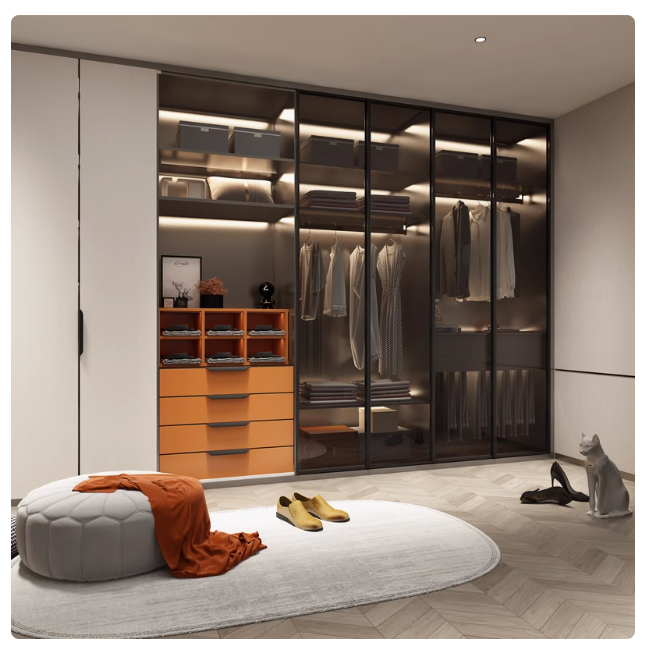
Glass is becoming increasingly popular in modern wardrobe designs. Glass panels, often used for doors or inserts, create a sleek, minimalist look that adds a touch of luxury and lightness to any space.
Pros:
- Aesthetic appeal: Glass creates a clean, modern look and makes the room feel more spacious and open.
- Variety: Glass comes in several finishes—clear, frosted, tinted, or mirrored—allowing for customization.
- Easy to clean: Glass surfaces are smooth and easy to wipe down, requiring minimal maintenance.
Cons:
- Fragility: Glass is prone to breaking, making it a less practical choice for homes with young children or pets.
- Smudges and fingerprints: Glass surfaces tend to show fingerprints and dust, requiring more frequent cleaning.
5. Metal: Industrial and Contemporary Flair
Metal adds an industrial or contemporary flair to wardrobe designs. Steel, aluminum, and brass are commonly used for frames, handles, and accents. Metal is durable, strong, and provides a sleek, modern finish.
Pros:
- Strength and durability: Metal is incredibly strong, making it ideal for wardrobe frames and hardware that must support heavy loads.
- Modern aesthetic: Metal elements bring a stylish, cutting-edge feel, especially in minimalist or industrial spaces.
- Low maintenance: Metals like stainless steel are resistant to corrosion and require minimal care.
Cons:
- Cold appearance: Some people find metal to be too harsh or cold for living spaces, where warmth and comfort are key.
- Scratches and dents: Metal surfaces can scratch or dent more easily than wood or MDF.
6. Laminates: Versatile, Cost-Effective, and Easy to Maintain
Laminates are synthetic materials made by layering a decorative surface over a substrate like MDF or plywood. Available in a wide variety of colors, patterns, and finishes, laminate wardrobes are affordable, durable, and low-maintenance.
Pros:
- Variety of finishes: Laminates come in a wide range of textures and patterns, from wood-look to glossy, high-tech finishes.
- Durability: Laminates are resistant to stains, scratches, and fading, making them an excellent choice for high-traffic areas.
- Low maintenance: Laminates are easy to clean and require little upkeep.
Cons:
- Less luxurious: While laminates can imitate the appearance of wood or other materials, they don’t have the same high-end feel as solid wood or glass.
- Seams and edges: Poorly finished laminate edges can deteriorate over time, which may affect the overall aesthetic.
When it comes to selecting the right material for your modern wardrobe, it’s important to weigh your budget, design goals, and the practical aspects of daily use. For those seeking timeless elegance and durability, solid wood is the perfect choice. MDF and plywood offer cost-effective alternatives without sacrificing much in terms of quality. If you desire a more luxurious and contemporary vibe, glass and metal are both excellent options for their sleek, modern appeal. Finally, laminates provide versatility and affordability, making them a solid choice for budget-conscious homeowners.
In the end, the best material for your wardrobe design is one that fits your personal needs and aesthetic preferences. By carefully considering the pros and cons of each option, you’ll be able to select a material that complements your space and supports your design vision. The right material can not only serve as a practical storage solution but also elevate your wardrobe to a stunning focal point in your home.